Buy xxxnx.eu ?
We are moving the project
xxxnx.eu .
Are you interested in purchasing the domain
xxxnx.eu ?
domain@kv-gmbh.de · 0541-91531010
Buy xxxnx.eu ?
Did the Kurds really descend from the Indo-Europeans?
The origins of the Kurds are still a matter of debate among scholars. Some theories suggest that the Kurds are descendants of the Indo-Europeans, while others argue that they have a distinct ethnic and linguistic background. Linguistic evidence does suggest that Kurdish is an Indo-European language, but this does not necessarily mean that the Kurds themselves are direct descendants of the Indo-Europeans. The issue is complex and requires further research and analysis to reach a definitive conclusion. **
What are Indo-European Aryans?
Indo-European Aryans were a group of people who spoke the Indo-European language and were believed to have migrated from the Eurasian steppes into regions such as India, Iran, and Europe around 4000-2000 BCE. They were a nomadic, pastoral society with a hierarchical social structure and a pantheon of gods. The term "Aryan" has been misused in the past to promote racist ideologies, but it is important to understand the historical and linguistic context in which the Indo-European Aryans existed. **


Similar search terms for Indo-Europeans
Top-Angebote
Products related to Indo-Europeans:
-
ECARPETGALLERY Hand Loomed Indo Gabbeh Brown Wool Rug - 8'3 x 9'10Primary materials:100% Wool / 100% Cotton Pile height:Approx 0.50 In Style:Gabbeh,Tribal Primary color:Brown Secondary colors:Brown, Cream Pattern:Open Field Tip: We recommend the use of a non-skid pad to keep the rug in place on smooth surfaces.1242,99 $*Shipping: 0,00 $Secure redirect to the provider
-
ECARPETGALLERY Hand Loomed Indo Gabbeh Red Wool Rug - 2'8 x 7'10Primary materials:100% Wool / 100% Cotton Pile height:Approx 0.50 In Style:Gabbeh,Tribal Primary color:Red Secondary colors:Dark Blue, Ivory, Light Orange, Orange, Red Pattern:Open Field Tip: We recommend the use of a non-skid pad to keep the rug in…338,49 $*Shipping: 0,00 $Secure redirect to the provider
-
ECARPETGALLERY Hand Loomed Indo Gabbeh Blue Wool Rug - 2'6 x 9'10Primary materials:100% Wool / 100% Cotton Pile height:Approx 0.50 In Style:Gabbeh,Tribal Primary color:Blue Secondary colors:Beige, Blue Pattern:Open Field Tip: We recommend the use of a non-skid pad to keep the rug in place on smooth surfaces.393,99 $*Shipping: 0,00 $Secure redirect to the provider
-
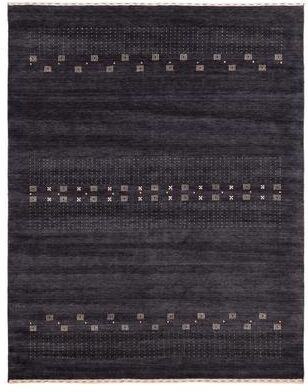
ECARPETGALLERY Hand Loomed Indo Gabbeh Charcoal Wool Rug - 8'1 x 9'10Primary materials:100% Wool / 100% Cotton Pile height:Approx 0.50 In Style:Gabbeh,Tribal Primary color:Charcoal Secondary colors:Charcoal, White Pattern:Open Field Tip: We recommend the use of a non-skid pad to keep the rug in place on smooth surfaces.1218,49 $*Shipping: 0,00 $Secure redirect to the provider


-
What are Indo-European languages?
Indo-European languages are a large language family that includes over 400 languages and dialects spoken by about 3 billion people, making it the largest language family in the world. These languages are spoken primarily in Europe, Western and South Asia, and parts of the Americas. Some of the most widely spoken Indo-European languages include English, Spanish, Hindi, and Russian. The family is believed to have originated from a common ancestral language spoken thousands of years ago, and it has since diversified into the many languages we know today. **
-
What is Proto-Indo-European?
Proto-Indo-European is the hypothetical common ancestor of the Indo-European language family, which includes languages such as English, Spanish, Hindi, Russian, and many others. It is believed to have been spoken thousands of years ago, possibly around 4500-2500 BCE, in the Pontic-Caspian steppe region. Linguists have reconstructed Proto-Indo-European based on similarities found in the vocabulary, grammar, and phonology of its descendant languages. While no written records of Proto-Indo-European exist, its existence is inferred from the similarities among the Indo-European languages. **
-
How can one learn Indo-European?
One can learn Indo-European by studying its grammar, vocabulary, and phonology through textbooks, online resources, and language courses. It is important to familiarize oneself with the historical context and evolution of the language family to understand its structure and development. Practice speaking, writing, and listening to Indo-European languages to improve fluency and comprehension. Additionally, joining language exchange groups or finding a tutor can provide valuable opportunities for conversation and feedback. **
-
Why is the origin Indo-European?
The origin of the Indo-European language family is believed to be in the Pontic-Caspian steppe region, which is located in present-day Ukraine and southern Russia. This region is considered the homeland of the Proto-Indo-European people, from whom the Indo-European languages are believed to have descended. Linguistic evidence, as well as archaeological and genetic research, supports the theory that the Indo-European languages spread from this region through migrations and cultural exchanges. The diverse and widespread nature of the Indo-European languages today can be traced back to this ancient origin in the Pontic-Caspian steppe. **


Why are Northern Europeans taller than Southern Europeans?
Northern Europeans are generally taller than Southern Europeans due to a combination of genetic and environmental factors. Genetic differences, such as the presence of certain height-related genes, may contribute to the variation in height between these populations. Additionally, environmental factors such as diet, access to healthcare, and overall living conditions can also play a role in determining height. Northern European countries tend to have better access to nutrition and healthcare, which can contribute to their taller average height compared to Southern European countries. **
Are Turks Europeans?
The question of whether Turks are Europeans is a complex and debated issue. Geographically, Turkey straddles both Europe and Asia, with a small portion of its territory located in southeastern Europe. Culturally, Turkey has a unique blend of European, Middle Eastern, and Central Asian influences. While Turkey has sought to join the European Union and has a long history of interaction with Europe, some Europeans may not consider Turks to be Europeans due to differences in religion, culture, and history. Ultimately, the classification of Turks as Europeans is subjective and can vary depending on individual perspectives. **
Top-Angebote
Products related to Indo-Europeans:
-
ECARPETGALLERY Hand Loomed Indo Gabbeh Charcoal Wool Rug - 2'7 x 9'9Primary materials:100% Wool / 100% Cotton Pile height:Approx 0.50 In Style:Gabbeh,Tribal Primary color:Charcoal Secondary colors:Beige, Charcoal, Light Orange, Orange Pattern:Open Field Tip: We recommend the use of a non-skid pad to keep the rug in...403,49 $*Shipping: 0,00 $Secure redirect to the provider
-
ECARPETGALLERY Hand Loomed Indo Gabbeh Brown Wool Rug - 8'3 x 9'10Primary materials:100% Wool / 100% Cotton Pile height:Approx 0.50 In Style:Gabbeh,Tribal Primary color:Brown Secondary colors:Brown, Cream Pattern:Open Field Tip: We recommend the use of a non-skid pad to keep the rug in place on smooth surfaces.1242,99 $*Shipping: 0,00 $Secure redirect to the provider
-
ECARPETGALLERY Hand Loomed Indo Gabbeh Red Wool Rug - 2'8 x 7'10Primary materials:100% Wool / 100% Cotton Pile height:Approx 0.50 In Style:Gabbeh,Tribal Primary color:Red Secondary colors:Dark Blue, Ivory, Light Orange, Orange, Red Pattern:Open Field Tip: We recommend the use of a non-skid pad to keep the rug in…338,49 $*Shipping: 0,00 $Secure redirect to the provider
-
Did the Kurds really descend from the Indo-Europeans?
The origins of the Kurds are still a matter of debate among scholars. Some theories suggest that the Kurds are descendants of the Indo-Europeans, while others argue that they have a distinct ethnic and linguistic background. Linguistic evidence does suggest that Kurdish is an Indo-European language, but this does not necessarily mean that the Kurds themselves are direct descendants of the Indo-Europeans. The issue is complex and requires further research and analysis to reach a definitive conclusion. **
-
What are Indo-European Aryans?
Indo-European Aryans were a group of people who spoke the Indo-European language and were believed to have migrated from the Eurasian steppes into regions such as India, Iran, and Europe around 4000-2000 BCE. They were a nomadic, pastoral society with a hierarchical social structure and a pantheon of gods. The term "Aryan" has been misused in the past to promote racist ideologies, but it is important to understand the historical and linguistic context in which the Indo-European Aryans existed. **
-
What are Indo-European languages?
Indo-European languages are a large language family that includes over 400 languages and dialects spoken by about 3 billion people, making it the largest language family in the world. These languages are spoken primarily in Europe, Western and South Asia, and parts of the Americas. Some of the most widely spoken Indo-European languages include English, Spanish, Hindi, and Russian. The family is believed to have originated from a common ancestral language spoken thousands of years ago, and it has since diversified into the many languages we know today. **
-
What is Proto-Indo-European?
Proto-Indo-European is the hypothetical common ancestor of the Indo-European language family, which includes languages such as English, Spanish, Hindi, Russian, and many others. It is believed to have been spoken thousands of years ago, possibly around 4500-2500 BCE, in the Pontic-Caspian steppe region. Linguists have reconstructed Proto-Indo-European based on similarities found in the vocabulary, grammar, and phonology of its descendant languages. While no written records of Proto-Indo-European exist, its existence is inferred from the similarities among the Indo-European languages. **
Similar search terms for Indo-Europeans
-
ECARPETGALLERY Hand Loomed Indo Gabbeh Blue Wool Rug - 2'6 x 9'10Primary materials:100% Wool / 100% Cotton Pile height:Approx 0.50 In Style:Gabbeh,Tribal Primary color:Blue Secondary colors:Beige, Blue Pattern:Open Field Tip: We recommend the use of a non-skid pad to keep the rug in place on smooth surfaces.393,99 $*Shipping: 0,00 $Secure redirect to the provider
-
ECARPETGALLERY Hand Loomed Indo Gabbeh Charcoal Wool Rug - 8'1 x 9'10Primary materials:100% Wool / 100% Cotton Pile height:Approx 0.50 In Style:Gabbeh,Tribal Primary color:Charcoal Secondary colors:Charcoal, White Pattern:Open Field Tip: We recommend the use of a non-skid pad to keep the rug in place on smooth surfaces.1218,49 $*Shipping: 0,00 $Secure redirect to the provider
-
ECARPETGALLERY Hand Loomed Indo Gabbeh Charcoal Wool Rug - 7'11 x 9'9Primary materials:100% Wool / 100% Cotton Pile height:Approx 0.50 In Style:Gabbeh,Tribal Primary color:Charcoal Secondary colors:Charcoal, Cream, Light Orange, Red Pattern:Open Field Tip: We recommend the use of a non-skid pad to keep the rug in...1183,99 $*Shipping: 0,00 $Secure redirect to the provider
-
ECARPETGALLERY Hand Loomed Indo Gabbeh Navy Wool Rug - 2'7 x 8'0Primary materials:100% Wool / 100% Cotton Pile height:Approx 0.50 In Style:Gabbeh,Tribal Primary color:Navy Secondary colors:Beige, Light Orange, Navy Blue, Orange Pattern:Open Field Tip: We recommend the use of a non-skid pad to keep the rug in...335,49 $*Shipping: 0,00 $Secure redirect to the provider
-
How can one learn Indo-European?
One can learn Indo-European by studying its grammar, vocabulary, and phonology through textbooks, online resources, and language courses. It is important to familiarize oneself with the historical context and evolution of the language family to understand its structure and development. Practice speaking, writing, and listening to Indo-European languages to improve fluency and comprehension. Additionally, joining language exchange groups or finding a tutor can provide valuable opportunities for conversation and feedback. **
-
Why is the origin Indo-European?
The origin of the Indo-European language family is believed to be in the Pontic-Caspian steppe region, which is located in present-day Ukraine and southern Russia. This region is considered the homeland of the Proto-Indo-European people, from whom the Indo-European languages are believed to have descended. Linguistic evidence, as well as archaeological and genetic research, supports the theory that the Indo-European languages spread from this region through migrations and cultural exchanges. The diverse and widespread nature of the Indo-European languages today can be traced back to this ancient origin in the Pontic-Caspian steppe. **
-
Why are Northern Europeans taller than Southern Europeans?
Northern Europeans are generally taller than Southern Europeans due to a combination of genetic and environmental factors. Genetic differences, such as the presence of certain height-related genes, may contribute to the variation in height between these populations. Additionally, environmental factors such as diet, access to healthcare, and overall living conditions can also play a role in determining height. Northern European countries tend to have better access to nutrition and healthcare, which can contribute to their taller average height compared to Southern European countries. **
-
Are Turks Europeans?
The question of whether Turks are Europeans is a complex and debated issue. Geographically, Turkey straddles both Europe and Asia, with a small portion of its territory located in southeastern Europe. Culturally, Turkey has a unique blend of European, Middle Eastern, and Central Asian influences. While Turkey has sought to join the European Union and has a long history of interaction with Europe, some Europeans may not consider Turks to be Europeans due to differences in religion, culture, and history. Ultimately, the classification of Turks as Europeans is subjective and can vary depending on individual perspectives. **
* All prices are inclusive of VAT and, if applicable, plus shipping costs. The offer information is based on the details provided by the respective shop and is updated through automated processes. Real-time updates do not occur, so deviations can occur in individual cases. ** Note: Parts of this content were created by AI.