Buy xxxnx.eu ?
We are moving the project
xxxnx.eu .
Are you interested in purchasing the domain
xxxnx.eu ?
domain@kv-gmbh.de · 0541-91531010
Buy xxxnx.eu ?
What is the grandfather paradox and what is the father paradox?
The grandfather paradox is a theoretical scenario in time travel where a person travels back in time and inadvertently prevents their grandparents from meeting, thus preventing the person's own birth. This creates a paradox because if the person was never born, they could not have traveled back in time to prevent their grandparents from meeting in the first place. The father paradox is a similar concept where a time traveler goes back in time and prevents their own father from meeting their mother, thus preventing their own birth. This paradox also raises questions about the possibility of altering one's own existence through time travel and the resulting contradictions that arise. Both paradoxes highlight the complexities and logical inconsistencies that can arise in theories of time travel. **
What is the Christian paradox?
The Christian paradox refers to the idea that in order to gain one's life, they must first lose it. This concept is based on the teachings of Jesus in the Bible, where he emphasizes the importance of selflessness, humility, and sacrifice. It highlights the idea that true fulfillment and purpose in life come from serving others and putting their needs above our own. The Christian paradox challenges individuals to go against the norms of society that prioritize self-interest and instead embrace a life of love, compassion, and service to others. **
Similar search terms for The-Plant-Paradox-By
Top-Angebote
Products related to The-Plant-Paradox-By:
-
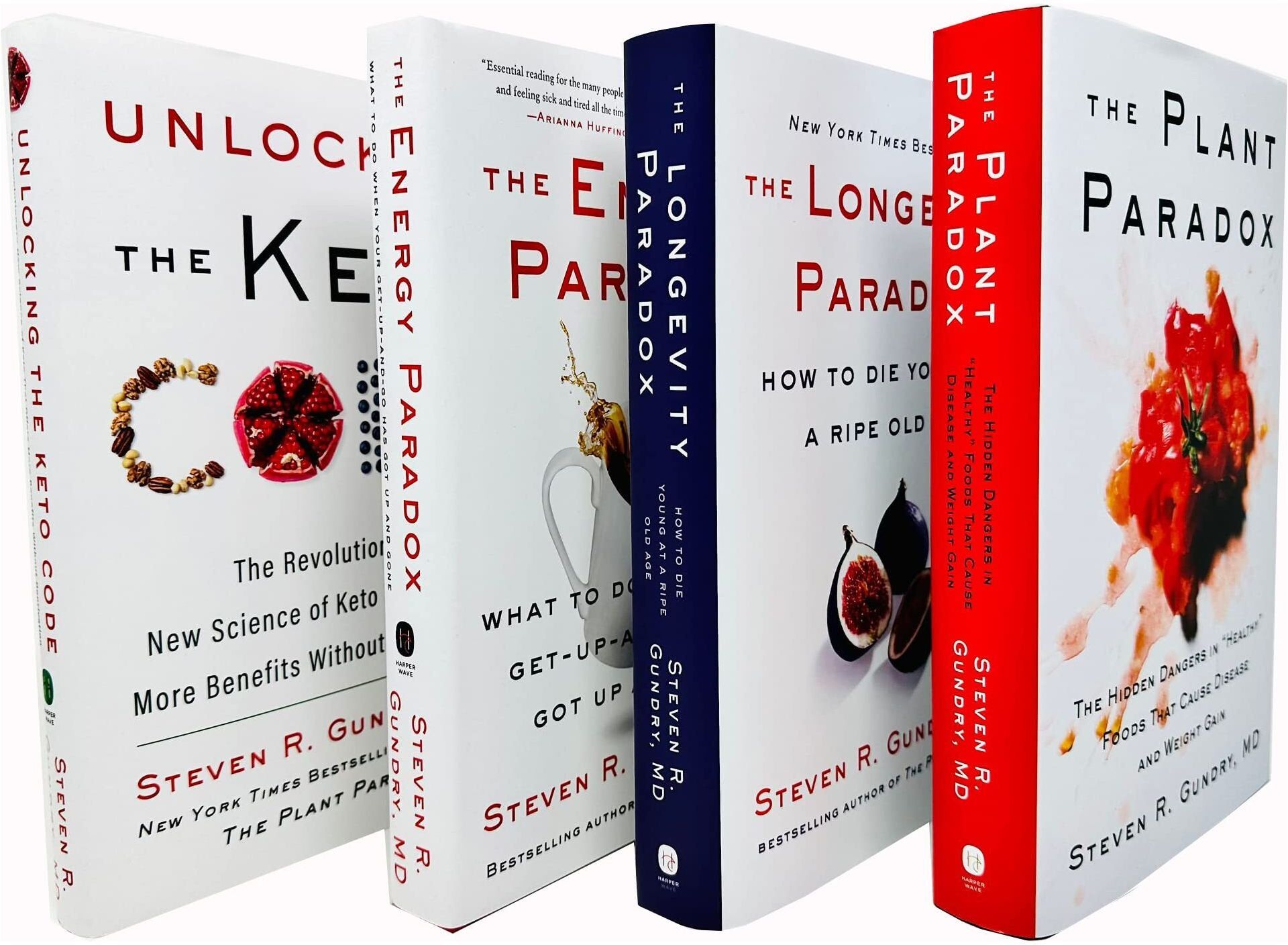
HarperWave ltd Dr. Steven R Gundry MD 4 Books Collection Set (The Plant Paradox, The Longevity Paradox, The Energy Paradox and Unlocking The Keto Code)Dr. Steven R Gundry MD 4 Books Collection Set (The Plant Paradox, The Longevity Paradox, The Energy Paradox & Unlocking The Keto Code): The Plant Paradox: In The Plant Paradox, renowned cardiologist Dr. Steven Gundry reveals that gluten is just one variety of a common, and highly toxic, plant-based protein called lectin. Lectins are found not only in grains like wheat but also in the “gluten-free” foods most of us commonly regard as healthy, including many fruits, vegetables, nuts, beans, and conventional dairy products. The Longevity Paradox: This groundbreaking book holds the answer. Working with thousands of patients, Dr. Gundry has discovered that the “diseases of aging” we most fear are not simply a function of age; rather, they are a byproduct of the way we have lived over the decades. In The Longevity Paradox, he maps out a new approach to aging well—one that is based on supporting the health of the “oldest” parts of us: the microorganisms that live within our bodies. The Energy Paradox: In The Energy Paradox, Dr. Gundry expands upon his previous discussions of gut, microbiome, and mitochondrial health, linking immune malfunction to the mental and physical symptoms of fatigue—including exhaustion, brain fog, depression, anxiety, and low metabolism. As Dr. Gundry explains, feeling tired, moody, and zapped of energy is not normal, no matter your workload or age. Unlocking the Keto Code: In Unlocking the Keto Code, Dr. Gundry reveals the biological mechanism that makes keto diets so successful: a cellular process known as “mitochondrial uncoupling.” As it turns out, ketones are not the magical fuel source they’ve been made out to be; in fact, the body cannot run on ketones and fats alone.24,90 £*Shipping: 2,99 £Secure redirect to the provider
-
What is the refugee paradox?
The refugee paradox refers to the contradiction between the international community's recognition of the rights and needs of refugees and the lack of effective action to address their plight. Despite the global commitment to protect and support refugees, many face significant barriers to finding safety, stability, and opportunity. This paradox highlights the gap between the principles of refugee protection and the practical challenges of providing meaningful assistance and solutions for displaced people. It underscores the need for greater political will and collective action to address the root causes of displacement and improve the conditions for refugees. **
-
What is the Olbers' Paradox?
Olbers' Paradox is the question of why the night sky is dark if the universe is infinite and filled with an infinite number of stars. According to the paradox, if the universe is infinite and unchanging, then every line of sight should eventually end on the surface of a star, making the night sky as bright as the surface of a star. This paradox has led to the development of theories such as the expansion of the universe and the absorption of light by interstellar dust and gas to explain the darkness of the night sky. **
-
What is the mirror paradox?
The mirror paradox is a philosophical concept that explores the nature of reflection and perception. It raises the question of whether a mirror image is a true reflection of reality or a distorted representation. On one hand, the mirror accurately reflects the physical appearance of an object or person, but on the other hand, it presents a reversed image. This paradox challenges our understanding of perception and raises questions about the nature of reality and how we interpret it. **
-
What is the Raven Paradox?
The Raven Paradox is a thought experiment that challenges our understanding of inductive reasoning. It was formulated by the philosopher Carl Gustav Hempel in 1945. The paradox arises from the observation that confirming instances (e.g. seeing a black raven) do not necessarily provide evidence for a general hypothesis (e.g. all ravens are black). This challenges the traditional view that confirming instances increase the probability of a hypothesis being true. The paradox highlights the complexities of inductive reasoning and the limitations of drawing general conclusions from specific observations. **
What is the omnipotence paradox?
The omnipotence paradox is a philosophical problem that arises from the concept of omnipotence, or the ability to do anything. The paradox questions whether an omnipotent being could create a task that it is unable to perform. If the being can create such a task and then cannot perform it, it would not be truly omnipotent. However, if the being cannot create such a task, then it is also not truly omnipotent. This paradox has been debated by theologians, philosophers, and scholars for centuries, and it raises important questions about the nature of omnipotence and the limits of divine power. **
What is the Petersburg Paradox?
The Petersburg Paradox is a thought experiment in probability theory that highlights the paradoxical nature of infinite expected value. It is named after the city of St. Petersburg, where the experiment was first described by Daniel Bernoulli in 1738. The paradox arises from a gambling game in which the potential payoff doubles with each successive coin flip, leading to an infinite expected value. However, most people would not be willing to pay an infinite amount to play the game, which raises questions about how individuals actually make decisions under uncertainty. **
Top-Angebote
Products related to The-Plant-Paradox-By:
-
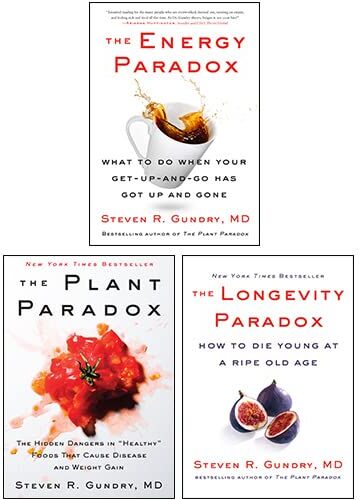
Harper Dr. Steven R Gundry MD 3 Books Collection Set (The Plant Paradox, The Longevity Paradox & The Energy Paradox)Dr. Steven R Gundry MD 3 Books Collection Set (The Plant Paradox, The Longevity Paradox & The Energy Paradox): The Plant Paradox: In The Plant Paradox, renowned cardiologist Dr. Steven Gundry reveals that gluten is just one variety of a common, and highly toxic, plant-based protein called lectin. Lectins are found not only in grains like wheat but also in the “gluten-free” foods most of us commonly regard as healthy, including many fruits, vegetables, nuts, beans, and conventional dairy products. These proteins, which are found in the seeds, grains, skins, rinds, and leaves of plants, are designed by nature to protect them from predators (including humans). The Longevity Paradox: This groundbreaking book holds the answer. Working with thousands of patients, Dr. Gundry has discovered that the “diseases of aging” we most fear are not simply a function of age; rather, they are a byproduct of the way we have lived over the decades. In The Longevity Paradox, he maps out a new approach to aging well—one that is based on supporting the health of the “oldest” parts of us: the microorganisms that live within our bodies. The Energy Paradox: In The Energy Paradox, Dr. Gundry expands upon his previous discussions of gut, microbiome, and mitochondrial health, linking immune malfunction to the mental and physical symptoms of fatigue—including exhaustion, brain fog, depression, anxiety, and low metabolism. As Dr. Gundry explains, feeling tired, moody, and zapped of energy is not normal, no matter your workload or age. Fatigue is an SOS flare from the body, one that is intended to alert us that something is wrong.18,99 £*Shipping: 2,99 £Secure redirect to the provider
-
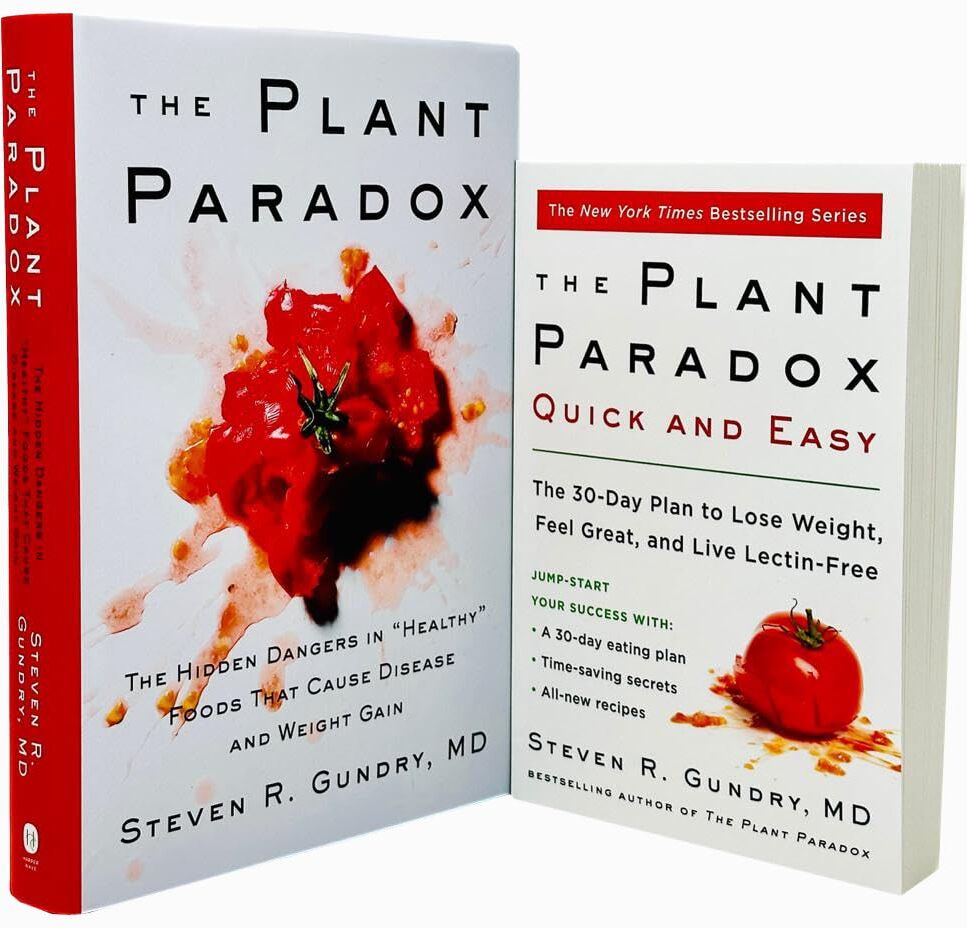
Harper The Plant Paradox & The Plant Paradox Quick and Easy 2 Book Collection Set by Steven R. Gundry – 30-Day Diet Plan & Health GuideThe Plant Paradox Series 2 Books Collection Set By Dr. Steven R Gundry MD (The Plant Paradox [Hardcover] & The Plant Paradox Quick and Easy: The 30-Day Plan to Lose Weight, Feel Great, and Live Lectin-Free): The Plant Paradox [Hardcover]: In The Plant Paradox, renowned cardiologist Dr. Steven Gundry reveals that gluten is just one variety of a common, and highly toxic, plant-based protein called lectin. Lectins are found not only in grains like wheat but also in the “gluten-free” foods most of us commonly regard as healthy, including many fruits, vegetables, nuts, beans, and conventional dairy products. These proteins, which are found in the seeds, grains, skins, rinds, and leaves of plants, are designed by nature to protect them from predators (including humans). Once ingested, they incite a kind of chemical warfare in our bodies, causing inflammatory reactions that can lead to weight gain and serious health conditions. The Plant Paradox Quick and Easy: In Dr. Steven Gundry’s breakout bestseller The Plant Paradox, readers learned the surprising truth about foods that have long been regarded as healthy. Lectins—a type of protein found in fruits, vegetables, legumes, dairy, and grains—wreak havoc on the gut, creating systemic inflammation and laying the groundwork for disease and weight gain. Avoiding lectins offers incredible health benefits but requires a significant lifestyle change—one that, for many people, can feel overwhelming.Now, in The Plant Paradox Quick and Easy, Dr. Gundry makes it simpler than ever to go lectin free. His 30-day challenge offers incentives, support, and results along with a toolkit for success.12,99 £*Shipping: 2,99 £Secure redirect to the provider
-
HarperWave ltd Dr. Steven R Gundry MD 4 Books Collection Set (The Plant Paradox, The Longevity Paradox, The Energy Paradox and Unlocking The Keto Code)Dr. Steven R Gundry MD 4 Books Collection Set (The Plant Paradox, The Longevity Paradox, The Energy Paradox & Unlocking The Keto Code): The Plant Paradox: In The Plant Paradox, renowned cardiologist Dr. Steven Gundry reveals that gluten is just one variety of a common, and highly toxic, plant-based protein called lectin. Lectins are found not only in grains like wheat but also in the “gluten-free” foods most of us commonly regard as healthy, including many fruits, vegetables, nuts, beans, and conventional dairy products. The Longevity Paradox: This groundbreaking book holds the answer. Working with thousands of patients, Dr. Gundry has discovered that the “diseases of aging” we most fear are not simply a function of age; rather, they are a byproduct of the way we have lived over the decades. In The Longevity Paradox, he maps out a new approach to aging well—one that is based on supporting the health of the “oldest” parts of us: the microorganisms that live within our bodies. The Energy Paradox: In The Energy Paradox, Dr. Gundry expands upon his previous discussions of gut, microbiome, and mitochondrial health, linking immune malfunction to the mental and physical symptoms of fatigue—including exhaustion, brain fog, depression, anxiety, and low metabolism. As Dr. Gundry explains, feeling tired, moody, and zapped of energy is not normal, no matter your workload or age. Unlocking the Keto Code: In Unlocking the Keto Code, Dr. Gundry reveals the biological mechanism that makes keto diets so successful: a cellular process known as “mitochondrial uncoupling.” As it turns out, ketones are not the magical fuel source they’ve been made out to be; in fact, the body cannot run on ketones and fats alone.24,90 £*Shipping: 2,99 £Secure redirect to the provider
-
What is the grandfather paradox and what is the father paradox?
The grandfather paradox is a theoretical scenario in time travel where a person travels back in time and inadvertently prevents their grandparents from meeting, thus preventing the person's own birth. This creates a paradox because if the person was never born, they could not have traveled back in time to prevent their grandparents from meeting in the first place. The father paradox is a similar concept where a time traveler goes back in time and prevents their own father from meeting their mother, thus preventing their own birth. This paradox also raises questions about the possibility of altering one's own existence through time travel and the resulting contradictions that arise. Both paradoxes highlight the complexities and logical inconsistencies that can arise in theories of time travel. **
-
What is the Christian paradox?
The Christian paradox refers to the idea that in order to gain one's life, they must first lose it. This concept is based on the teachings of Jesus in the Bible, where he emphasizes the importance of selflessness, humility, and sacrifice. It highlights the idea that true fulfillment and purpose in life come from serving others and putting their needs above our own. The Christian paradox challenges individuals to go against the norms of society that prioritize self-interest and instead embrace a life of love, compassion, and service to others. **
-
What is the refugee paradox?
The refugee paradox refers to the contradiction between the international community's recognition of the rights and needs of refugees and the lack of effective action to address their plight. Despite the global commitment to protect and support refugees, many face significant barriers to finding safety, stability, and opportunity. This paradox highlights the gap between the principles of refugee protection and the practical challenges of providing meaningful assistance and solutions for displaced people. It underscores the need for greater political will and collective action to address the root causes of displacement and improve the conditions for refugees. **
-
What is the Olbers' Paradox?
Olbers' Paradox is the question of why the night sky is dark if the universe is infinite and filled with an infinite number of stars. According to the paradox, if the universe is infinite and unchanging, then every line of sight should eventually end on the surface of a star, making the night sky as bright as the surface of a star. This paradox has led to the development of theories such as the expansion of the universe and the absorption of light by interstellar dust and gas to explain the darkness of the night sky. **
Similar search terms for The-Plant-Paradox-By
-
What is the mirror paradox?
The mirror paradox is a philosophical concept that explores the nature of reflection and perception. It raises the question of whether a mirror image is a true reflection of reality or a distorted representation. On one hand, the mirror accurately reflects the physical appearance of an object or person, but on the other hand, it presents a reversed image. This paradox challenges our understanding of perception and raises questions about the nature of reality and how we interpret it. **
-
What is the Raven Paradox?
The Raven Paradox is a thought experiment that challenges our understanding of inductive reasoning. It was formulated by the philosopher Carl Gustav Hempel in 1945. The paradox arises from the observation that confirming instances (e.g. seeing a black raven) do not necessarily provide evidence for a general hypothesis (e.g. all ravens are black). This challenges the traditional view that confirming instances increase the probability of a hypothesis being true. The paradox highlights the complexities of inductive reasoning and the limitations of drawing general conclusions from specific observations. **
-
What is the omnipotence paradox?
The omnipotence paradox is a philosophical problem that arises from the concept of omnipotence, or the ability to do anything. The paradox questions whether an omnipotent being could create a task that it is unable to perform. If the being can create such a task and then cannot perform it, it would not be truly omnipotent. However, if the being cannot create such a task, then it is also not truly omnipotent. This paradox has been debated by theologians, philosophers, and scholars for centuries, and it raises important questions about the nature of omnipotence and the limits of divine power. **
-
What is the Petersburg Paradox?
The Petersburg Paradox is a thought experiment in probability theory that highlights the paradoxical nature of infinite expected value. It is named after the city of St. Petersburg, where the experiment was first described by Daniel Bernoulli in 1738. The paradox arises from a gambling game in which the potential payoff doubles with each successive coin flip, leading to an infinite expected value. However, most people would not be willing to pay an infinite amount to play the game, which raises questions about how individuals actually make decisions under uncertainty. **
* All prices are inclusive of VAT and, if applicable, plus shipping costs. The offer information is based on the details provided by the respective shop and is updated through automated processes. Real-time updates do not occur, so deviations can occur in individual cases. ** Note: Parts of this content were created by AI.