Buy xxxnx.eu ?
We are moving the project
xxxnx.eu .
Are you interested in purchasing the domain
xxxnx.eu ?
domain@kv-gmbh.de · 0541-91531010
Buy xxxnx.eu ?
Can polynomials be normalized?
Yes, polynomials can be normalized by dividing each term by the leading coefficient. This process ensures that the leading coefficient of the polynomial is equal to 1, making it easier to compare and analyze different polynomials. Normalizing polynomials can also help simplify calculations and make it easier to identify important characteristics of the polynomial, such as its degree and leading term. **
How do you calculate polynomials?
To calculate polynomials, you first need to identify the terms of the polynomial, which are the individual parts separated by addition or subtraction. Then, you combine like terms by adding or subtracting the coefficients of the same variables raised to the same powers. Finally, you simplify the expression by combining any remaining like terms. If there are any exponents, you can use the rules of exponents to simplify further. **

Similar search terms for Polynomials
Top-Angebote
Products related to Polynomials:
-
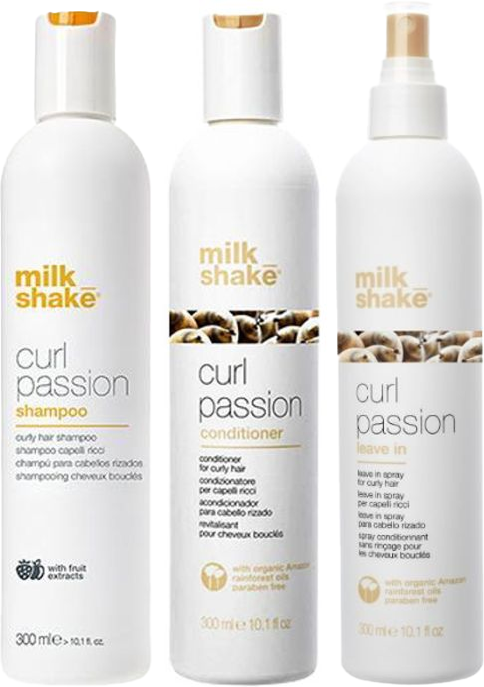
milk_shake curl passion shampoo 300ml, curl passion conditioner 300ml,Gently cleanse your hair while caring for your curls with this curly cleansing and conditioning pack from milk_shake. With professional-standard oils and natural ingredients, the Curl Passion Shampoo by milk_shake reinforces your hair's natural shape and eliminates frizz so it looks and feels stronger and healthier than ever. Enriched with organic milk and quinoa proteins as well as fruit extracts and organic pracaxi and babassu oils, the milk_shake Curl Passion Conditioner boosts softness and manageability, without weighing the hair down. The brand new milk_shake Leave In Conditioning Treatment is a treatment spray to help make curls soft, bouncy, flexible and long-lasting. Ingredients Shampoo: Aqua (Water), Sodium Coceth Sulfate, Disodium Laureth Sulfosuccinate, Cocamidopropyl Betaine, Acrylates Copolymer, Sucrose Cocoate, Glycerin, Sorbitol, Citrus Grandis (Grapefruit) Fruit Extract, Pyrus Malus (Apple) Fruit Extract, Prunus Persica (Peach) Fruit Extract, Sodium Hyaluronate, Styrene/Acrylates Copolymer, Xanthan Gum, Polyquaternium-7, Propylene Glycol, Guar Hydroxypropyltrimonium Chloride, Linalool, Hexyl Cinnamal, Limonene, Citronellol, Parfum (Fragrance), Citric Acid, Disodium EDTA, Phenoxyethanol, Methylisothiazolinone, Potassium Sorbate, Sodium Benzoate, CI 19140 (Yellow 5), CI 15985 (Yellow 6). Conditioner: Aqua (Water), Cetearyl Alcohol, Propylene Glycol, Behentrimonium Chloride, Glycerin, Butyrospermum Parkii (Shea) Butter, Cetrimonium Chloride, PEG-8 Dimethicone, Tocopheryl Acetate, Polyquaternium-28, Panthenol, Hydrolyzed Milk Protein, Hydrolyzed Quinoa, Helianthus Annuus (Sunflower) Seed Extract, Citrus Limon (Lemon) Fruit Extract, Vaccinium Myrtillus Fruit Extract, Pyrus Malus (Apple) Fruit Extract, Orbignya Oleifera Seed Oil, Pentaclethra Macroloba Seed Oil, Ethylhexyl Methoxycinnamate, Diethylamino Hydroxybenzoyl Hexyl Benzoate Parfum (Fragrance), Phenoxyethanol, Ethylhexylglycerin, Isopropyl Alcohol, Citric Acid, Sodium Benzoate, Potassium Sorbate, Butylene Glycol, Benzyl Alcohol, Glycine, Sodium Lactate, Sodium Citrate, Tocopherol, Benzyl Benzoate, Hexyl Cinnamal, Limonene, Caprylyl Glycol. Leave In: Aqua (Water), PEG-40 Hydrogenated Castor Oil, Amodimethicone, Cetrimonium Chloride, Polyester-37, Polyquaternium-22, Hydrolyzed Milk Protein, Trideceth-12, Hydrolyzed Quinoa, Helianthus Annuus (Sunflower) Seed Extract, Citrus Limon (Lemon) Fruit Extract, Vaccinium Myrtillus Fruit Extract, Pyrus Malus (Apple) Fruit Extract, Orbignya Oleifera Seed Oil, Pentaclethra Macroloba Seed Oil, Parfum (Fragrance), Phenoxyethanol, Caprylyl Glycol, Citric Acid, Butylene Glycol, Benzyl Alcohol, Tocopherol, Amyl Cinnamal, Benzyl Benzoate, Benzyl Salicylate, Citronellol, Coumarin, Geraniol, Hexyl Cinnamal, Limonene, Linalool. Perfectionist: Aqua (Water), Cyclopentasiloxane, Polysorbate 60, Glycerin, Myristyl Alcohol, Cetyl Alcohol, Stearyl Alcohol, PVP, Hydroxypropyl Starch Phosphate, Polyquaternium-10, Parfum (Fragrance), Phenoxyethanol, Sodium...81,72 £*Shipping: 0,00 £Secure redirect to the provider
-
Youfap Market Memory Foam Wedge, Couple Pillow For Intimacy & Support, Lumbar Neck Support Memory Foam Wedge, Couple Pillow For Intimacy & Support, Lumbar Neck SupportUltimate Comfort and Support for Intimacy Designed for couples seeking better comfort, the Couple Pillow for Intimacy & Support features a memory foam wedge that helps achieve the perfect position during intimate moments. Its unique shape promotes...99,97 $*Shipping: 0,00 $Secure redirect to the provider
-
Nourison Desire Indoor Silver Abstract Area RugMake a bold statement with this abstract rug from the Desire Collection. Presented in neutral shades of grey and silver, it features a crisscross linear pattern with carved accents that add depth.205,00 $*Shipping: 0,00 $Secure redirect to the provider




-
What is the reflection of polynomials?
The reflection of a polynomial is a transformation that flips the graph of the polynomial over a specified line, such as the x-axis or the y-axis. This transformation results in a mirror image of the original graph across the specified line. The reflection of a polynomial can be achieved by replacing x with -x in the polynomial function, which effectively reflects the graph across the y-axis. This transformation can help visualize the symmetry of the polynomial and its behavior across different axes. **
-
How does factoring third degree polynomials work?
Factoring third degree polynomials involves finding the roots of the polynomial, which are the values of x that make the polynomial equal to zero. Once the roots are found, the polynomial can be factored using the roots as factors. This process can be done using various methods such as the rational root theorem, synthetic division, or the factor theorem. By factoring the polynomial, we can express it as a product of linear and quadratic factors, making it easier to analyze and solve. **
-
Which polynomials have a value different from zero?
Polynomials with non-zero coefficients have values different from zero. A polynomial is a sum of terms, each of which is a constant multiplied by a variable raised to a non-negative integer power. If any of the coefficients in the polynomial are non-zero, then the polynomial will have a value different from zero for certain input values of the variable. **
-
How can one use complex numbers in polynomials?
Complex numbers can be used in polynomials as roots or solutions to the polynomial equation. For example, if a polynomial has complex roots, these can be used to factorize the polynomial into linear factors. Additionally, complex numbers can be used to solve higher degree polynomial equations using methods such as the Fundamental Theorem of Algebra and the Factor Theorem. Overall, complex numbers provide a way to extend the solutions of polynomial equations beyond just real numbers. **


How to create polynomials that have no real roots?
One way to create polynomials that have no real roots is to have all the roots be complex numbers. This can be achieved by using quadratic polynomials with a negative discriminant, resulting in complex conjugate roots. Another method is to have the polynomial be of odd degree, as odd-degree polynomials always have at least one real root. Additionally, by using higher degree polynomials with carefully chosen coefficients, it is possible to ensure that all roots are complex. **
How is the concept of differentiation introduced in polynomials?
In polynomials, differentiation is introduced as the process of finding the derivative of a polynomial function. The derivative of a polynomial is found by applying the power rule, where each term is differentiated separately by multiplying the coefficient of the term by the exponent of the variable and then decreasing the exponent by 1. This process allows us to find the rate of change of the polynomial function at any given point. Differentiation helps us analyze the behavior of polynomial functions, identify critical points, and determine the concavity of the graph. **
Top-Angebote
Products related to Polynomials:
-
milk_shake curl passion shampoo 300ml, curl passion conditioner 300mlGently cleanse your hair while caring for your curls with this curly cleansing and conditioning pack from milk_shake. With professional-standard oils and natural ingredients, the Curl Passion Shampoo by milk_shake reinforces your hair's natural shape and eliminates frizz so it looks and feels stronger and healthier than ever. Enriched with organic milk and quinoa proteins as well as fruit extracts and organic pracaxi and babassu oils, the milk_shake Curl Passion Conditioner boosts softness and manageability, without weighing the hair down. The brand new milk_shake Leave In Conditioning Treatment is a treatment spray to help make curls soft, bouncy, flexible and long-lasting. Ingredients Leave In: Aqua (Water), PEG-40 Hydrogenated Castor Oil, Amodimethicone, Cetrimonium Chloride, Polyester-37, Polyquaternium-22, Hydrolyzed Milk Protein, Trideceth-12, Hydrolyzed Quinoa, Helianthus Annuus (Sunflower) Seed Extract, Citrus Limon (Lemon) Fruit Extract, Vaccinium Myrtillus Fruit Extract, Pyrus Malus (Apple) Fruit Extract, Orbignya Oleifera Seed Oil, Pentaclethra Macroloba Seed Oil, Parfum (Fragrance), Phenoxyethanol, Caprylyl Glycol, Citric Acid, Butylene Glycol, Benzyl Alcohol, Tocopherol, Amyl Cinnamal, Benzyl Benzoate, Benzyl Salicylate, Citronellol, Coumarin, Geraniol, Hexyl Cinnamal, Limonene, Linalool.60,17 £*Shipping: 0,00 £Secure redirect to the provider
-
milk_shake curl passion shampoo 300ml, curl passion conditioner 300ml,Gently cleanse your hair while caring for your curls with this curly cleansing and conditioning pack from milk_shake. With professional-standard oils and natural ingredients, the Curl Passion Shampoo by milk_shake reinforces your hair's natural shape and eliminates frizz so it looks and feels stronger and healthier than ever. Enriched with organic milk and quinoa proteins as well as fruit extracts and organic pracaxi and babassu oils, the milk_shake Curl Passion Conditioner boosts softness and manageability, without weighing the hair down. The brand new milk_shake Leave In Conditioning Treatment is a treatment spray to help make curls soft, bouncy, flexible and long-lasting. Ingredients Shampoo: Aqua (Water), Sodium Coceth Sulfate, Disodium Laureth Sulfosuccinate, Cocamidopropyl Betaine, Acrylates Copolymer, Sucrose Cocoate, Glycerin, Sorbitol, Citrus Grandis (Grapefruit) Fruit Extract, Pyrus Malus (Apple) Fruit Extract, Prunus Persica (Peach) Fruit Extract, Sodium Hyaluronate, Styrene/Acrylates Copolymer, Xanthan Gum, Polyquaternium-7, Propylene Glycol, Guar Hydroxypropyltrimonium Chloride, Linalool, Hexyl Cinnamal, Limonene, Citronellol, Parfum (Fragrance), Citric Acid, Disodium EDTA, Phenoxyethanol, Methylisothiazolinone, Potassium Sorbate, Sodium Benzoate, CI 19140 (Yellow 5), CI 15985 (Yellow 6). Conditioner: Aqua (Water), Cetearyl Alcohol, Propylene Glycol, Behentrimonium Chloride, Glycerin, Butyrospermum Parkii (Shea) Butter, Cetrimonium Chloride, PEG-8 Dimethicone, Tocopheryl Acetate, Polyquaternium-28, Panthenol, Hydrolyzed Milk Protein, Hydrolyzed Quinoa, Helianthus Annuus (Sunflower) Seed Extract, Citrus Limon (Lemon) Fruit Extract, Vaccinium Myrtillus Fruit Extract, Pyrus Malus (Apple) Fruit Extract, Orbignya Oleifera Seed Oil, Pentaclethra Macroloba Seed Oil, Ethylhexyl Methoxycinnamate, Diethylamino Hydroxybenzoyl Hexyl Benzoate Parfum (Fragrance), Phenoxyethanol, Ethylhexylglycerin, Isopropyl Alcohol, Citric Acid, Sodium Benzoate, Potassium Sorbate, Butylene Glycol, Benzyl Alcohol, Glycine, Sodium Lactate, Sodium Citrate, Tocopherol, Benzyl Benzoate, Hexyl Cinnamal, Limonene, Caprylyl Glycol. Leave In: Aqua (Water), PEG-40 Hydrogenated Castor Oil, Amodimethicone, Cetrimonium Chloride, Polyester-37, Polyquaternium-22, Hydrolyzed Milk Protein, Trideceth-12, Hydrolyzed Quinoa, Helianthus Annuus (Sunflower) Seed Extract, Citrus Limon (Lemon) Fruit Extract, Vaccinium Myrtillus Fruit Extract, Pyrus Malus (Apple) Fruit Extract, Orbignya Oleifera Seed Oil, Pentaclethra Macroloba Seed Oil, Parfum (Fragrance), Phenoxyethanol, Caprylyl Glycol, Citric Acid, Butylene Glycol, Benzyl Alcohol, Tocopherol, Amyl Cinnamal, Benzyl Benzoate, Benzyl Salicylate, Citronellol, Coumarin, Geraniol, Hexyl Cinnamal, Limonene, Linalool. Perfectionist: Aqua (Water), Cyclopentasiloxane, Polysorbate 60, Glycerin, Myristyl Alcohol, Cetyl Alcohol, Stearyl Alcohol, PVP, Hydroxypropyl Starch Phosphate, Polyquaternium-10, Parfum (Fragrance), Phenoxyethanol, Sodium...81,72 £*Shipping: 0,00 £Secure redirect to the provider
-
Youfap Market Memory Foam Wedge, Couple Pillow For Intimacy & Support, Lumbar Neck Support Memory Foam Wedge, Couple Pillow For Intimacy & Support, Lumbar Neck SupportUltimate Comfort and Support for Intimacy Designed for couples seeking better comfort, the Couple Pillow for Intimacy & Support features a memory foam wedge that helps achieve the perfect position during intimate moments. Its unique shape promotes...99,97 $*Shipping: 0,00 $Secure redirect to the provider
-
Can polynomials be normalized?
Yes, polynomials can be normalized by dividing each term by the leading coefficient. This process ensures that the leading coefficient of the polynomial is equal to 1, making it easier to compare and analyze different polynomials. Normalizing polynomials can also help simplify calculations and make it easier to identify important characteristics of the polynomial, such as its degree and leading term. **
-
How do you calculate polynomials?
To calculate polynomials, you first need to identify the terms of the polynomial, which are the individual parts separated by addition or subtraction. Then, you combine like terms by adding or subtracting the coefficients of the same variables raised to the same powers. Finally, you simplify the expression by combining any remaining like terms. If there are any exponents, you can use the rules of exponents to simplify further. **
-
What is the reflection of polynomials?
The reflection of a polynomial is a transformation that flips the graph of the polynomial over a specified line, such as the x-axis or the y-axis. This transformation results in a mirror image of the original graph across the specified line. The reflection of a polynomial can be achieved by replacing x with -x in the polynomial function, which effectively reflects the graph across the y-axis. This transformation can help visualize the symmetry of the polynomial and its behavior across different axes. **
-
How does factoring third degree polynomials work?
Factoring third degree polynomials involves finding the roots of the polynomial, which are the values of x that make the polynomial equal to zero. Once the roots are found, the polynomial can be factored using the roots as factors. This process can be done using various methods such as the rational root theorem, synthetic division, or the factor theorem. By factoring the polynomial, we can express it as a product of linear and quadratic factors, making it easier to analyze and solve. **
Similar search terms for Polynomials
-
Nourison Desire Indoor Silver Abstract Area RugMake a bold statement with this abstract rug from the Desire Collection. Presented in neutral shades of grey and silver, it features a crisscross linear pattern with carved accents that add depth.205,00 $*Shipping: 0,00 $Secure redirect to the provider
-
Nourison Desire Indoor only Grey Abstract Area RugAdd sophisticated energy to your living room or bedroom with this abstract rug from the Desire Collection. The modern design is presented with a refined edge that instantly uplifts your space.144,00 $*Shipping: 0,00 $Secure redirect to the provider
-
milk_shake curl passion shampoo 300ml, curl passion conditioner 300mlGently cleanse your hair while caring for your curls with this curly cleansing and conditioning pack from milk_shake. With professional-standard oils and natural ingredients, the Curl Passion Shampoo by milk_shake reinforces your hair's natural shape and eliminates frizz so it looks and feels stronger and healthier than ever. Enriched with organic milk and quinoa proteins as well as fruit extracts and organic pracaxi and babassu oils, the milk_shake Curl Passion Conditioner boosts softness and manageability, without weighing the hair down. The brand new milk_shake Leave In Conditioning Treatment is a treatment spray to help make curls soft, bouncy, flexible and long-lasting. Ingredients Leave In: Aqua (Water), PEG-40 Hydrogenated Castor Oil, Amodimethicone, Cetrimonium Chloride, Polyester-37, Polyquaternium-22, Hydrolyzed Milk Protein, Trideceth-12, Hydrolyzed Quinoa, Helianthus Annuus (Sunflower) Seed Extract, Citrus Limon (Lemon) Fruit Extract, Vaccinium Myrtillus Fruit Extract, Pyrus Malus (Apple) Fruit Extract, Orbignya Oleifera Seed Oil, Pentaclethra Macroloba Seed Oil, Parfum (Fragrance), Phenoxyethanol, Caprylyl Glycol, Citric Acid, Butylene Glycol, Benzyl Alcohol, Tocopherol, Amyl Cinnamal, Benzyl Benzoate, Benzyl Salicylate, Citronellol, Coumarin, Geraniol, Hexyl Cinnamal, Limonene, Linalool.60,17 £*Shipping: 0,00 £Secure redirect to the provider
-
Which polynomials have a value different from zero?
Polynomials with non-zero coefficients have values different from zero. A polynomial is a sum of terms, each of which is a constant multiplied by a variable raised to a non-negative integer power. If any of the coefficients in the polynomial are non-zero, then the polynomial will have a value different from zero for certain input values of the variable. **
-
How can one use complex numbers in polynomials?
Complex numbers can be used in polynomials as roots or solutions to the polynomial equation. For example, if a polynomial has complex roots, these can be used to factorize the polynomial into linear factors. Additionally, complex numbers can be used to solve higher degree polynomial equations using methods such as the Fundamental Theorem of Algebra and the Factor Theorem. Overall, complex numbers provide a way to extend the solutions of polynomial equations beyond just real numbers. **
-
How to create polynomials that have no real roots?
One way to create polynomials that have no real roots is to have all the roots be complex numbers. This can be achieved by using quadratic polynomials with a negative discriminant, resulting in complex conjugate roots. Another method is to have the polynomial be of odd degree, as odd-degree polynomials always have at least one real root. Additionally, by using higher degree polynomials with carefully chosen coefficients, it is possible to ensure that all roots are complex. **
-
How is the concept of differentiation introduced in polynomials?
In polynomials, differentiation is introduced as the process of finding the derivative of a polynomial function. The derivative of a polynomial is found by applying the power rule, where each term is differentiated separately by multiplying the coefficient of the term by the exponent of the variable and then decreasing the exponent by 1. This process allows us to find the rate of change of the polynomial function at any given point. Differentiation helps us analyze the behavior of polynomial functions, identify critical points, and determine the concavity of the graph. **
* All prices are inclusive of VAT and, if applicable, plus shipping costs. The offer information is based on the details provided by the respective shop and is updated through automated processes. Real-time updates do not occur, so deviations can occur in individual cases. ** Note: Parts of this content were created by AI.